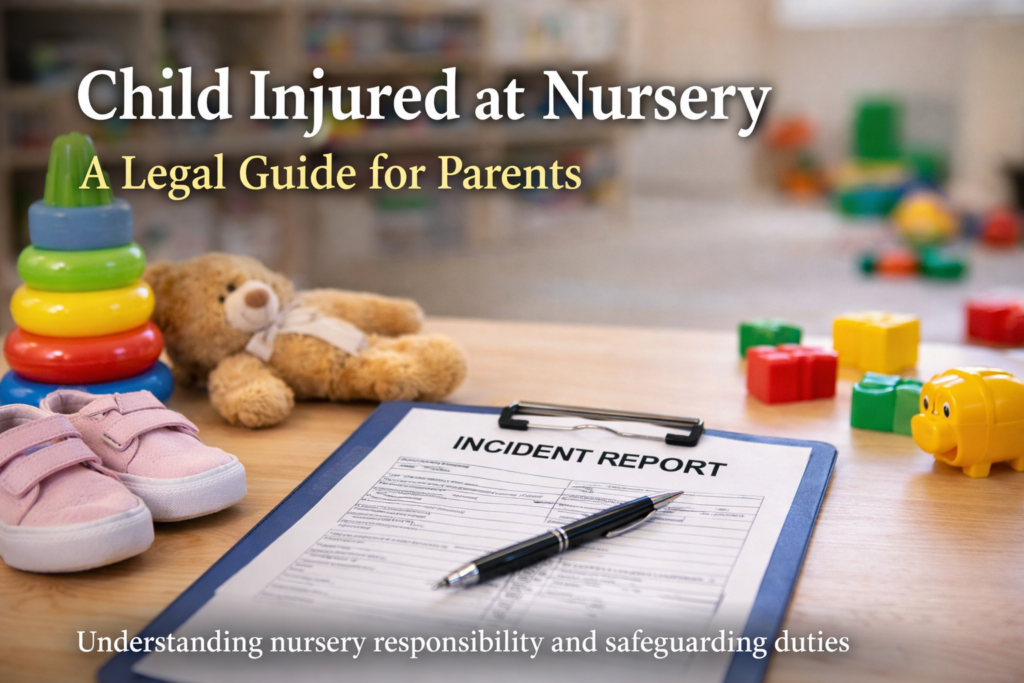
A Child Injured at Nursery often leaves parents distressed and uncertain, and therefore clear guidance on legal rights and nursery responsibilities becomes essential. Moreover, UK law imposes strict safeguarding and duty of care standards on childcare providers, which consequently makes it important for parents to understand these obligations before taking any next steps. Importantly, early legal advice helps protect a child’s immediate wellbeing while also safeguarding their long-term interests.
Key areas explored in this article
- Child Injured at Nursery: Understanding a Nursery’s Legal Duty.
- Child Injured at Nursery: Steps Parents Should Take Immediately.
- Child Injured at Nursery: How Dawn Solicitors Can Assist.
- Conclusion.
- FAQs.
Child Injured at Nursery: Understanding a Nursery’s Legal Duty
Child Injured at Nursery cases require a careful assessment of whether the nursery met its legal duty of care, as UK law obliges childcare providers to maintain safe premises, provide proper supervision, and employ suitably trained staff. Moreover, nurseries must consistently follow safeguarding policies and maintain appropriate staff-to-child ratios to protect children effectively. Therefore, failures linked to inadequate supervision, unsafe environments, or insufficient training may indicate negligence rather than unavoidable accidents. Additionally, accident records and incident reports carry significant evidential value, as they document what occurred and how staff responded. Consequently, parents should request written reports promptly and retain copies securely for future reference. Importantly, while minor injuries do not automatically establish fault, serious or clearly preventable injuries often warrant closer legal scrutiny.
Child Injured at Nursery: Steps Parents Should Take Immediately
When a Child gets Injured at a Nursery, parents should act calmly yet decisively to protect their child’s welfare. Therefore, parents should seek medical attention promptly if any symptoms cause concern. Moreover, parents should request a detailed incident report from the nursery without unnecessary delay. Additionally, parents should take photographs of injuries and the surrounding environment to preserve accurate evidence. Consequently, parents should carefully record dates, conversations, and explanations provided by nursery staff. Importantly, parents should avoid confrontation and instead document events objectively. Furthermore, early legal advice helps protect evidence and ensures all procedures remain compliant.
Child Injured at Nursery: How Dawn Solicitors Can Assist.
Importantly, Children Injury claims require sensitivity, precision, and specialist legal knowledge, and therefore Dawn Solicitors carefully assesses whether negligence contributed to the incident while gathering medical evidence, nursery records, and safeguarding documentation, and moreover communicates directly with insurers to reduce parental stress, consequently providing parents with clear advice on prospects, time limits, and next steps, while importantly prioritising child welfare and pursuing appropriate compensation, and furthermore supporting families through every stage with professionalism and care.
To contact a solicitor from our firm, simply call us at +44 1753 530 111 or send us an email on info@dawnsolicitors.com
Conclusion
Ultimately, Child Injury cases demand legal clarity alongside emotional reassurance, as understanding nursery responsibilities empowers parents during challenging moments. Consequently, early advice secures evidence, protects children’s long-term interests, and ensures Dawn Solicitors guides families with care and confidence.
FAQ's
Q1. Can parents claim compensation on behalf of a child?
Yes, parents can pursue a claim as a litigation friend until the child reaches adulthood.
Q2. Is there a time limit for nursery injury claims?
Yes, strict limitation periods apply to nursery injury claims, and while adults usually have three years from the accident date to act, the law pauses this time limit for children, therefore allowing them to bring a claim until their 21st birthday.