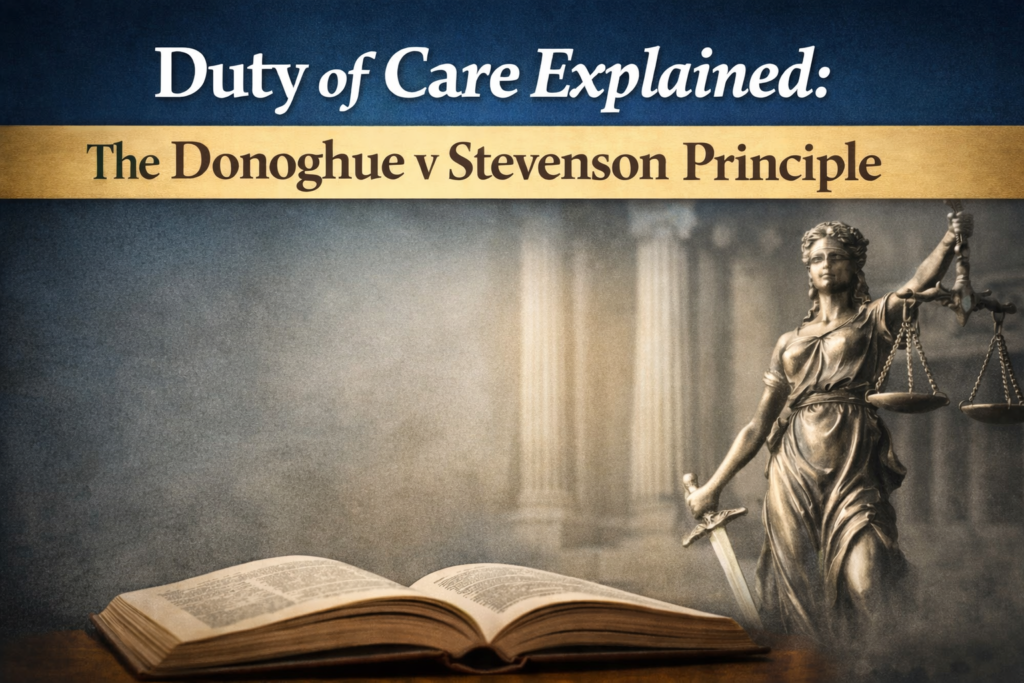
Duty of Care forms the foundation of modern personal injury law in the United Kingdom, and therefore courts examine whether someone owed a legal obligation to prevent foreseeable harm. Moreover, the landmark case Donoghue v Stevenson established this principle, and consequently negligence claims rely on proving this legal duty first. Importantly, understanding this concept helps injured individuals recognise their rights clearly.
Key areas explored in this article
- What the Principle Means.
- The Donoghue v Stevenson Case.
- How It Applies in Personal Injury Claims.
- Why It Matters for Injured Individuals.
- How Dawn Solicitors Can Help.
- Conclusion.
- FAQs.
Duty of Care: What the Principle Means
Duty of Care requires individuals and organisations to act reasonably to avoid causing harm, and therefore people must consider how their actions affect others. Moreover, the law recognises responsibility where harm is foreseeable, and additionally failure to take reasonable precautions may constitute negligence. Consequently, injured parties may claim compensation, and importantly the principle applies across many everyday situations.
Duty of Care: The Donoghue v Stevenson Case
This duty developed from the Donoghue v Stevenson decision in 1932, and therefore the court recognised that legal responsibility could exist even without a direct contract between parties. Moreover, the judges held that a manufacturer owed responsibility to the ultimate consumer who would use the product, and additionally the court introduced the neighbour principle to define who may be affected by one’s actions. Consequently, individuals and organisations must avoid acts or omissions likely to cause foreseeable injury to others closely affected by them, and importantly this ruling established the foundation of modern negligence law. Furthermore, courts continue to apply this principle today when assessing whether a duty exists in personal injury claims.
Duty of Care: How It Applies in Personal Injury Claims
Legal responsibility determines whether a defendant owed an obligation to the claimant, and therefore courts assess relationships and foreseeable risk carefully. Moreover, drivers owe duties to road users, and additionally employers owe duties to employees. Consequently, occupiers owe duties to visitors, and importantly breach of duty leads to negligence claims. Furthermore, the claimant must show that injury resulted from that breach.
Duty of Care: Why It Matters for Injured Individuals
Duty of care establishes whether compensation claims can succeed legally, and therefore proving the duty confirms responsibility for safety. Moreover, a breach demonstrates a failure to act reasonably, and additionally causation links that breach directly to the injury. Consequently, courts award damages where negligence exists, and importantly the principle protects public safety standards. Furthermore, it promotes accountability across society.
How Dawn Solicitors Can Assist
Duty of Care issues often require careful legal assessment and evidence analysis, and therefore Dawn Solicitors thoroughly evaluate liability in injury circumstances. Moreover, the firm clearly explains duty and breach to clients, and additionally Dawn Solicitors strategically gather supporting evidence. Consequently, clients pursue claims confidently, and importantly the firm negotiates compensation effectively. Furthermore, Dawn Solicitors actively support rehabilitation and recovery needs.
To contact a solicitor from our firm, simply call us at +44 1753 530 111 or send us an email on info@dawnsolicitors.com
Conclusion
Ultimately, the Donoghue v Stevenson decision established modern negligence law principles, and therefore duty of care now underpins personal injury claims. Moreover, recognising this duty clearly defines legal responsibility, and consequently injured individuals better understand their rights. Importantly, Dawn Solicitors remain committed to protecting those harmed by negligence with clarity and care.
FAQ's
Q1.Does Duty of Care apply to everyday situations?
Yes, because the law recognises responsibility wherever foreseeable harm may occur, and therefore it applies in daily activities.
Q2. Can Duty of Care exist without a contract?
Yes, because Donoghue v Stevenson confirmed duty can arise independently of contracts, and therefore liability may exist without agreement.