Tomlinson v Congleton [2003] UKHL 47 remains the leading House of Lords decision on obvious risks and occupier liability. In this case, a young man suffered a devastating injury, yet the council escaped liability. This outcome, therefore, surprises many injured people. Understanding it, however, helps you judge a claim realistically. So, at Dawn Solicitors, we explain the case and what it means for you.
Key areas explored in this article
- Tomlinson v Congleton 2003: What Were the Facts?
- What Did the Courts Decide in Tomlinson v Congleton?
- What Legal Principles Did Tomlinson v Congleton Establish?
- How Does Tomlinson v Congleton Affect Injury Claims Today?
- How Dawn Solicitors Can Assist You.
- Conclusion.
- FAQs.
Tomlinson v Congleton 2003: What Were the Facts?
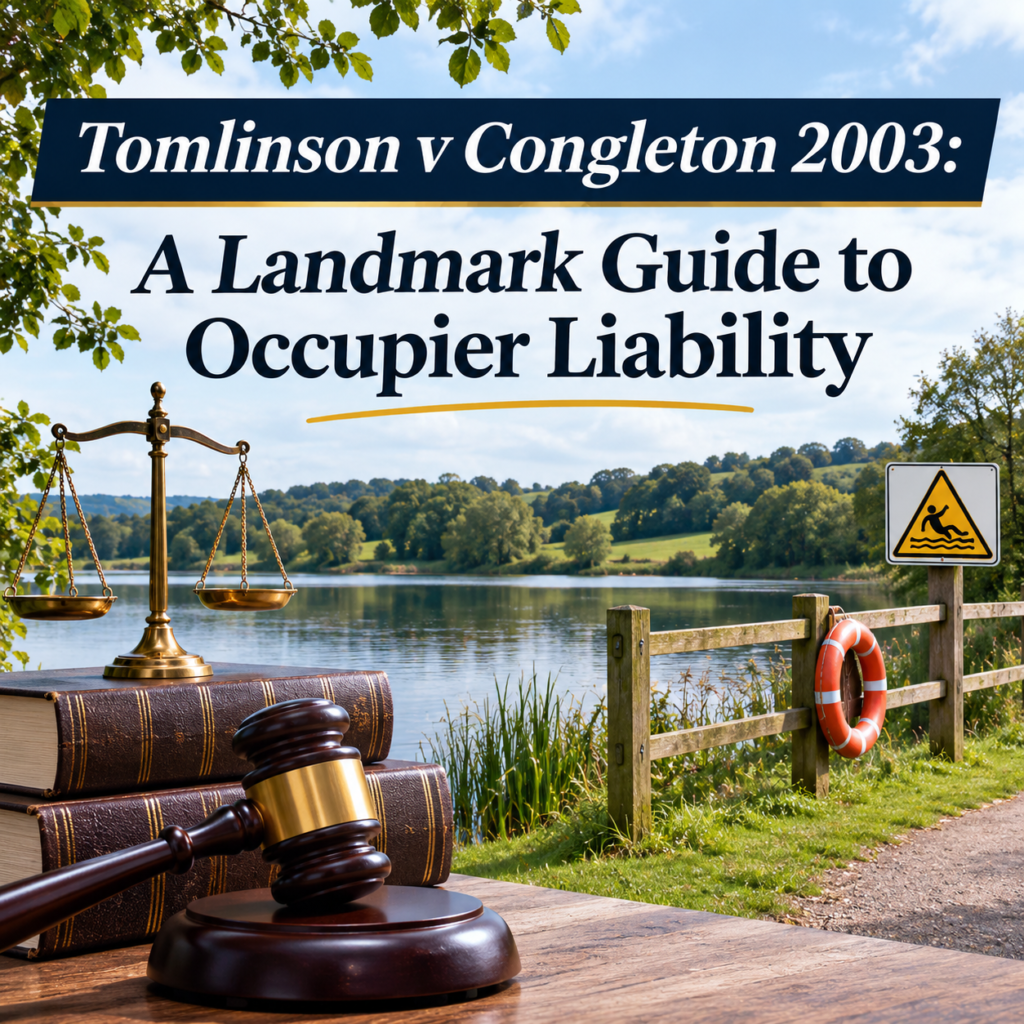
In May 1995, John Tomlinson, aged 18, visited Brereton Heath Country Park in Cheshire. The council ran the park, and a former sand quarry had formed a lake there. On a hot day, he ran into the shallow water and dived. Unfortunately, he struck his head on the sandy bottom and broke his neck. He consequently became tetraplegic. Meanwhile, the council had posted signs reading “Dangerous Water: No Swimming”. Rangers also told swimmers to leave, but many ignored them. Moreover, the council had planned to make the beach less attractive but had not finished the work.
What Did the Courts Decide in Tomlinson v Congleton?
First of all, the case travelled through three courts. The High Court dismissed Mr Tomlinson’s claim. The Court of Appeal, however, found the council liable, subject to a large reduction for his own fault. The House of Lords then unanimously allowed the council’s appeal. Lord Hoffmann gave the leading speech. He held that the risk came from Mr Tomlinson’s choice to dive, not from any dangerous state of the premises. Likewise, the Lords noted that the danger was obvious. Consequently, whichever Act applied, the result was the same.
What Legal Principles Did Tomlinson v Congleton Establish?
First, adults who freely choose a risky activity must generally accept its obvious dangers. Second, courts weigh the cost and burden of preventing the risk. Third, they consider the social value of the activity. Lord Hoffmann, in particular, warned against banning ordinary enjoyment because a few people get hurt. As a result, occupiers need not make every place safe for every choice. Subsequently, Parliament reflected this thinking in section 1 of the Compensation Act 2006. Indeed, that section lets courts consider whether safety steps would discourage a desirable activity.
How Does Tomlinson v Congleton Affect Injury Claims Today?
The decision still shapes claims against councils and landowners. However, it does not close the door on every claim. Hidden dangers, for example, remain very different from obvious ones. Children also receive more protection, as Jolley v Sutton shows. Similarly, defective equipment or poor maintenance can still create liability. Therefore, each case turns on its own facts. In practice, evidence about the danger and the claimant’s knowledge matters most.
How Dawn Solicitors Can Assist You
Dawn Solicitors, first, assesses your accident and the risk involved. Next, we explain how cases like Tomlinson v Congleton affect your prospects. We also gather evidence about the premises, warnings and maintenance. Additionally, we advise honestly on whether your claim has strong grounds. Moreover, we explore other routes where an occupier ignored a hidden danger. As a result, you receive clear advice before you commit time and money.
To contact a solicitor from our firm, simply call us at +44 1753 530 111 or send us an email on info@dawnsolicitors.com
Conclusion
Overall, Tomlinson v Congleton shows that obvious risks and personal choice limit occupier liability. Nevertheless, genuine hazards and poor maintenance still support strong claims. Dawn Solicitors, therefore, assesses every case on its facts. So contact our friendly team today to discuss your injury.
FAQ's
Q1. Does Tomlinson v Congleton stop all claims against councils?
No, it applies to obvious risks that people choose to take. Claims for hidden or poorly managed dangers, however, can still succeed.
Q2.Did Mr Tomlinson receive any compensation?
No, the House of Lords ruled the council was not liable. Consequently, his claim failed.